
Cutting Renewal Costs: A Domain Investor’s Guide to Lean Portfolios

In the world of domain investing, profitability often hinges not only on the domains one acquires but also on how efficiently those assets are maintained over time. While acquisition strategies receive much of the spotlight, the renewal phase quietly defines whether a portfolio is sustainable or sinking. For seasoned investors, domain renewals are a recurring test of discipline and foresight, and for newcomers, they can quickly become the hidden drain that erodes all potential gains. Understanding how to cut renewal costs without compromising long-term growth is essential for building a lean, profitable portfolio that can survive market cycles and pricing fluctuations from registrars.
Every domain investor begins with enthusiasm, acquiring names that seem promising in various niches, but the accumulation phase soon leads to a portfolio that requires consistent annual renewals. As renewal invoices arrive, many discover that holding hundreds or thousands of domains can quickly cost thousands of dollars per year. The core challenge lies in balancing optimism with realism—deciding which domains truly deserve another year of holding costs and which must be released back into the market. A lean portfolio is not necessarily a small one but rather a focused collection of names that demonstrate clear value, resale potential, and long-term relevance. Reducing renewals without sacrificing opportunity requires a structured approach rooted in both financial prudence and strategic foresight.
I need to discuss the domain I own!
The first and most fundamental step in renewal optimization is establishing an objective evaluation framework for your domains. Emotional attachment is the silent enemy of efficiency; investors often renew domains simply because they liked the original idea or because it once attracted an inquiry. Instead, decisions should be based on measurable criteria such as keyword strength, search volume, market demand, brandability, comparable sales data, and backlink history. Evaluating performance through data—such as traffic statistics, inquiry frequency, or parking revenue—helps identify which names actually contribute to the bottom line. A domain that has sat untouched for five years with no offers, no type-in traffic, and minimal SEO potential may no longer justify its renewal cost, regardless of how clever it once seemed.
Registrar choice also plays a critical role in cutting renewal costs. Many investors scatter their portfolios across multiple registrars over time, often as a result of opportunistic acquisitions or registrar-specific promotions. Consolidating domains at registrars that offer competitive renewal pricing and volume discounts can significantly reduce annual expenses. Some registrars provide dedicated domain investor programs or bulk account tiers that lower renewal fees for large portfolios. Beyond direct pricing, administrative efficiency also saves money indirectly—managing fewer accounts means fewer missed renewals, fewer accidental redemptions, and a better ability to monitor expiring names. It is also wise to track the difference between first-year promotional prices and standard renewals; what seems like a bargain during registration may become a burden at renewal time if the regular rate is disproportionately high.
Timing renewals strategically is another underappreciated tactic. Many registrars allow early renewal at the current rate, which can be useful before expected price increases by registries. For extensions known to adjust prices annually, such as certain country-code TLDs or niche new gTLDs, renewing for multiple years in advance can lock in savings. Conversely, if a domain’s future is uncertain, it can be beneficial to delay renewal until the end of the grace period to see if any last-minute buyer interest surfaces. Some investors even use marketplace exposure as a test during renewal season—listing domains at discounted prices before expiration to gauge demand. If no interest emerges, allowing expiration becomes a deliberate cost-saving measure rather than an oversight.
Portfolio segmentation is a subtle yet powerful approach to maintaining leanness. By categorizing domains into performance tiers—such as premium resale prospects, mid-tier speculative names, and low-tier experiments—investors can apply differentiated renewal strategies. Premium names, especially those with consistent inbound interest or high appraisal value, warrant automatic multi-year renewals for security and continuity. Mid-tier names can be renewed selectively based on seasonal trends or shifting market interest, while the lowest tier can be subjected to strict drop criteria. Over time, this discipline ensures that renewal budgets align with expected returns, transforming the portfolio from a static collection into a dynamic investment ecosystem.
Another overlooked aspect of renewal cost optimization is leveraging promotions, coupons, and special transfer deals. Registrars frequently offer discounted transfers or seasonal sales for specific extensions, and moving domains strategically can result in substantial savings when multiplied across a large portfolio. However, frequent transfers should be balanced with the administrative overhead and potential temporary lock periods that limit immediate resale flexibility. For large investors, building direct relationships with account managers at registrars or reseller platforms often leads to private renewal discounts or custom bulk pricing, an advantage rarely available to casual domainers.
Cash flow management is also intertwined with renewal strategy. Smart investors forecast renewal expenses months in advance, aligning them with expected income from sales or affiliate revenue. This ensures renewals remain a planned investment rather than an emergency expense. For portfolios generating steady income, reinvesting a fixed percentage of profits into renewals keeps growth sustainable. For less profitable portfolios, implementing a “renewal ratio” can maintain discipline—only a certain percentage of underperforming names are allowed to renew each cycle unless they demonstrate measurable improvement in potential value. This method prevents the creeping expansion of non-performing assets that silently erode returns year after year.
Lean portfolios also benefit from periodic pruning sessions, ideally once or twice per year, where each domain is re-evaluated in the context of changing market trends. What was once a hot keyword or emerging technology may now be obsolete or over-saturated. Conversely, some domains may gain unexpected value due to social, economic, or technological developments, warranting renewed commitment. This adaptive management mirrors the principles of financial portfolio rebalancing, where asset allocations are periodically adjusted to maintain efficiency. In domain investing, lean does not mean minimal; it means optimized for current and foreseeable market realities.
Even within the renewal context, investors should not overlook the strategic role of expiration. Allowing domains to drop is not always a loss—it can be an opportunity. Expired inventory frees up both capital and cognitive bandwidth, allowing reinvestment into higher potential acquisitions or other business ventures. The key is to ensure that expirations are intentional, not accidental. Implementing expiration spreadsheets or using portfolio management software to track renewal dates, appraisal values, and pricing tiers ensures decisions remain proactive. Some investors even document the reasoning behind each drop to refine future acquisition filters and avoid repeating past mistakes.
Finally, maintaining a lean portfolio enhances mental clarity. Large, bloated collections often create a false sense of success, but they dilute focus and complicate decision-making. A refined, efficient portfolio built through deliberate pruning and disciplined renewals gives investors a clear view of their strongest assets and the flexibility to act quickly on new opportunities. Cost optimization, when applied intelligently, transforms renewals from a recurring burden into a strategic lever for growth. Every saved dollar on unnecessary renewals is a dollar available for high-potential acquisitions or marketing efforts that drive actual profit.
In the end, the art of cutting renewal costs is less about austerity and more about alignment. It is about ensuring that every domain held has a clear justification for its existence and that every renewal dollar contributes to a coherent investment strategy. The lean portfolio is the product of patience, analysis, and restraint—a reminder that in domain investing, survival and profitability are not determined by how many names one owns but by how many names truly matter.
News Blog Posts:
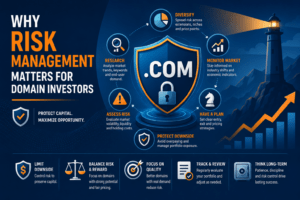 Why Risk Management Matters for Domain Investors
In the world of domain investing, opportunities are vast, competition is fierce, and the line between long-term profitability and financial strain is often determined by the presence or absence of a
 Domain Auctions: The Move from Private Deals to Public Bidding Wars
In the early domain name market, transactions were quiet affairs. Deals happened behind closed doors, initiated through direct outreach, personal networks, or a simple inquiry email sent to a domain
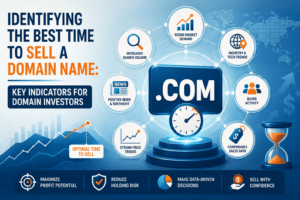 Identifying the Best Time to Sell a Domain Name: Key Indicators for Domain Investors
Knowing the best time to sell a domain name is one of the most critical decisions a domain investor can make. Timing is everything in domain investing, as market conditions, buyer demand, and trends
 The Impact of Technology Trends on Domain Investing
The landscape of full-time domain investing is profoundly influenced by technology trends, shaping both the strategies employed by investors and the value of the domains themselves. As technology