
Valuation Risk Overestimating Domain Value

Among the many risks faced by domain investors, one of the most insidious and widespread is valuation risk, specifically the danger of overestimating what a domain is worth. Unlike traditional assets such as equities or bonds, domains do not have a transparent market price that can be checked in real time. Their value is subjective, influenced by market trends, buyer psychology, linguistic appeal, branding potential, industry relevance, and scarcity. This lack of uniformity creates fertile ground for misjudgment. When investors consistently overvalue domains, they expose themselves to financial strain, reduced liquidity, missed opportunities, and a portfolio that underperforms over time.
Overestimating domain value often begins with optimism. Every investor can see the potential of a name, imagining the type of company that might one day buy it and the price they might be willing to pay. While optimism is necessary for spotting opportunity, it can easily turn into inflated expectations. A name may feel premium because it resonates personally with the investor, but personal attachment does not necessarily translate into market demand. Valuation risk arises precisely at this intersection between subjective enthusiasm and objective reality. An investor who consistently overvalues names ends up pricing them out of reach of actual buyers, leaving them unsold year after year while renewal costs pile up.
I need to discuss the domain I own!
Comparable sales data is often cited as a tool to mitigate valuation risk, but it is also one of the areas where overestimation can creep in. Investors may look at high-profile sales of similar domains and assume that their own holdings should command comparable prices. Yet domain sales are highly contextual—factors such as the urgency of the buyer, the strategic importance of the name, and the negotiation skills of the seller all play a role. A generic single-word .com may sell for millions under unique circumstances, but that does not mean a loosely related name with weaker brandability will achieve anything close. Overreliance on selective comparables without considering context leads to unrealistic valuations and protracted holding periods.
Emotional attachment compounds the problem. Domains are creative assets, and many investors feel pride in the originality of their registrations. The sense of ownership can create bias, making it difficult to objectively assess whether a name truly has market appeal. This emotional bias often results in setting prices too high or refusing to accept reasonable offers because they fall short of personal expectations. Over time, such rigidity results in missed opportunities. A fair offer that could have provided liquidity and profit is rejected, and years later the same domain may remain unsold, effectively costing the investor both money and opportunity. Recognizing and mitigating emotional bias is one of the most difficult but necessary aspects of managing valuation risk.
Market cycles also play a role in overestimation. During periods of hype, such as the early days of blockchain, cannabis, or artificial intelligence, investors often see names sell at inflated prices. This creates the illusion that all domains tied to those trends will enjoy sustained high valuations. However, once the hype subsides and demand normalizes, many of those speculative names lose value. Investors who continue to base valuations on peak-period sales risk clinging to outdated benchmarks. The failure to recognize when a trend has matured or faded leaves portfolios filled with overpriced assets that no longer reflect current demand. Correctly timing exits during hype cycles is crucial, but it requires resisting the temptation to overestimate long-term demand.
Another factor contributing to valuation risk is the misjudgment of liquidity. A name might genuinely be worth a high figure to the right buyer, but the pool of such buyers could be extremely small. Overestimating how quickly or easily such a buyer will appear creates cash flow risks, as the investor may assume liquidity that simply does not exist. Many portfolios suffer not because the domains are worthless, but because they are illiquid at the prices set by their owners. An investor who believes their name is a $100,000 asset may hold out for years, rejecting offers in the $10,000 to $20,000 range, only to find that no end user ever materializes at the higher figure. The risk lies not only in lost sales but also in the accumulation of renewal costs and the opportunity cost of holding capital hostage in underperforming assets.
Tools and automated appraisal systems add another layer of complexity. Many platforms offer algorithmic valuations of domains, generating price estimates based on factors such as keyword popularity, length, and extension. While useful as a rough guide, these tools can also give a false sense of precision. Investors who take automated valuations at face value risk setting unrealistic expectations. Algorithms cannot account for the nuances of buyer intent, cultural shifts, or brand psychology. A name valued at $25,000 by a tool might realistically be worth only a few hundred dollars in the actual market. The overreliance on automated estimates contributes to systematic overvaluation across portfolios.
Legal and regulatory considerations also influence valuation in ways that are often overlooked. A name that appears valuable on the surface may be burdened by trademark risk, limiting its marketability. Investors who ignore these legal risks may assign inflated values to names that, in practice, cannot be sold without risk of dispute. The perceived value evaporates once legal vulnerability is factored in, leaving the investor with a liability rather than an asset. Overestimation in this area is particularly dangerous because it can lead to disputes, financial losses, and reputational damage in addition to wasted renewals.
Portfolio-level risk management is particularly vulnerable to valuation misjudgments. When investors overestimate the value of their holdings, they may make broader strategic errors, such as failing to prune portfolios, overinvesting in renewals, or rejecting portfolio buyout offers that would have delivered healthy returns. Believing a portfolio is worth more than it realistically is can create complacency, where investors wait for sales that never arrive instead of actively rebalancing their holdings. This overconfidence results in portfolios that stagnate, burdened by overpriced names with little turnover. Proper risk management requires constant reevaluation of valuations, informed by current market data and a willingness to adjust downward when necessary.
Psychological biases amplify valuation risk in subtle but powerful ways. The sunk cost fallacy leads investors to continue overvaluing names because they have already invested years of renewals. Confirmation bias causes them to focus only on data that supports high valuations, ignoring evidence of declining demand. Anchoring bias locks investors into a specific number, such as the first price they imagined for a domain, even when market conditions no longer justify it. These cognitive traps make it exceedingly difficult to manage valuation risk without adopting a disciplined, evidence-based approach that counteracts natural human tendencies.
The long-term consequences of overestimating domain value are significant. Portfolios become bloated with names that underperform, capital is tied up in assets that do not generate liquidity, and investors miss out on opportunities to reinvest in stronger names. In extreme cases, overvaluation can lead to financial distress, as investors accumulate large renewal bills without the sales to cover them. The danger is not always visible in the short term, because domains are intangible assets that do not depreciate visibly like physical property. But over time, the cumulative effect of overestimation undermines both profitability and sustainability.
Mitigating valuation risk requires a commitment to realism and continuous learning. Investors must analyze actual sales data, not just headlines, and adjust expectations according to liquidity and industry trends. They must remain vigilant about pruning names that fail to generate interest, even if those names once seemed promising. They must treat automated tools as guides, not authorities, and balance algorithmic output with human judgment. Most importantly, they must remain flexible, willing to revise valuations downward when evidence indicates that a domain’s true market value is lower than hoped.
Ultimately, valuation risk in the form of overestimating domain value is less about numbers and more about discipline. It is the discipline to separate personal attachment from market reality, the discipline to evaluate opportunities against actual demand rather than imagined potential, and the discipline to accept smaller but real profits rather than holding out indefinitely for improbable windfalls. Successful domain investors recognize that valuations are not static but evolve with markets, trends, and buyer behavior. By approaching valuation with humility, objectivity, and a willingness to adapt, investors can minimize the dangers of overestimation and ensure that their portfolios generate consistent, sustainable returns over the long term.
News Blog Posts:
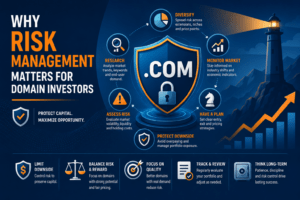 Why Risk Management Matters for Domain Investors
In the world of domain investing, opportunities are vast, competition is fierce, and the line between long-term profitability and financial strain is often determined by the presence or absence of a
 Domain Auctions: The Move from Private Deals to Public Bidding Wars
In the early domain name market, transactions were quiet affairs. Deals happened behind closed doors, initiated through direct outreach, personal networks, or a simple inquiry email sent to a domain
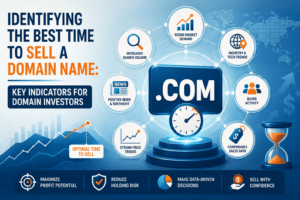 Identifying the Best Time to Sell a Domain Name: Key Indicators for Domain Investors
Knowing the best time to sell a domain name is one of the most critical decisions a domain investor can make. Timing is everything in domain investing, as market conditions, buyer demand, and trends
 The Impact of Technology Trends on Domain Investing
The landscape of full-time domain investing is profoundly influenced by technology trends, shaping both the strategies employed by investors and the value of the domains themselves. As technology