
How to Explain Domain Value to Traditional Businesses in Foreign Markets

One of the most enduring challenges in international domain investing lies in communicating the concept of digital asset value to traditional businesses operating in foreign markets. While companies in developed digital economies have long recognized that premium domains are equivalent to prime real estate in the online world, many businesses in emerging or traditionally structured markets still view domains as little more than technical necessities—a requirement for hosting a website rather than a strategic investment. Bridging this perception gap requires a nuanced understanding of both the economic logic of domain valuation and the cultural, linguistic, and commercial contexts of the foreign market. Explaining domain value across borders is not simply a matter of numbers or metrics; it is an exercise in translation—translating digital potential into language that resonates with traditional business mindsets.
At the heart of this task is the fundamental need to establish the legitimacy of domains as tangible, tradable assets. Many business owners, particularly in markets with limited digital infrastructure or less exposure to e-commerce, struggle to comprehend how a string of characters on the internet can command the same value as a piece of land or a physical store. To communicate effectively, domain investors must draw analogies that align with the local understanding of property, branding, and investment. In a country where retail space in a central district signifies status and profitability, a comparison between a short, keyword-rich domain and a storefront on the busiest street can be particularly powerful. The investor must illustrate that just as a physical address determines visibility in the real world, a domain name determines visibility in the digital one. This analogy helps translate an abstract concept into something that feels familiar and concrete.
I need to discuss the domain I own!
The next step in building comprehension involves demonstrating how domain value is derived. In many traditional markets, value is associated with tangible qualities—size, location, condition, and material worth. In contrast, domain value arises from factors such as memorability, linguistic simplicity, search relevance, and brand potential. To make this relatable, investors can focus on the measurable impact of a premium domain: higher search engine visibility, greater customer trust, and increased click-through rates. For instance, a local manufacturer may understand immediately when told that customers are more likely to visit a website called “beststeel.com” than a long, hyphenated or obscure alternative. Providing examples of major global companies that have paid millions for simple, descriptive domains—such as insurance.com or hotels.com—can further reinforce the idea that digital naming power translates directly into commercial advantage.
However, numerical examples and analogies alone are insufficient in markets where skepticism toward digital assets remains high. Many traditional businesses in foreign markets are risk-averse and prefer investments with predictable returns. To address this, domain investors should position premium domains not as speculative commodities but as brand infrastructure—long-term assets that appreciate as the business grows. Framing the purchase as part of a brand strategy rather than a one-time expense aligns with how these companies typically approach expansion and marketing. By explaining that a strong domain can reduce advertising costs, improve market perception, and protect against brand dilution, investors can help traditional businesses see the acquisition as a form of strategic capital investment rather than a fleeting trend.
Cultural context profoundly affects how value propositions are perceived. In hierarchical or relationship-oriented societies, trust and reputation play a more important role in business decision-making than data or logic alone. In such environments, domain investors must prioritize credibility before even attempting to discuss valuation. This might involve establishing connections through local intermediaries, providing verifiable references, or presenting case studies from companies within the same country or region. Traditional businesses may not respond favorably to high-pressure sales tactics or abstract discussions about global trends. Instead, they respond to examples rooted in their own market realities. For example, citing a local competitor who recently upgraded their domain and saw measurable business growth can be far more persuasive than referencing Western benchmarks. The key is to show that domain value is not a foreign or theoretical concept but one already being realized by peers within their economic ecosystem.
Language also plays a significant role in explaining domain value across borders. In markets where English is not the primary language, foreign domain investors must adapt their messaging to reflect local linguistic norms. A domain that appears appealing in English may hold little meaning or even negative connotations in another language. Therefore, the conversation must begin not with the assumption that the buyer understands English-language domain dynamics, but with an exploration of how domains function within their linguistic and cultural context. If the domain in question uses English words, it may be necessary to explain its global branding potential, particularly if the local business seeks to expand internationally. Conversely, if the domain aligns with local language keywords or phrases, the emphasis should be on its relevance and familiarity to native consumers. Demonstrating how language choice affects searchability, credibility, and customer engagement helps traditional businesses see the domain as an essential branding decision rather than an arbitrary purchase.
Pricing justification is one of the most difficult elements to communicate to traditional businesses unfamiliar with domain valuation models. The idea that a domain can cost tens or hundreds of thousands of dollars often meets resistance from companies accustomed to viewing digital expenses as minor budget items. To overcome this, investors should deconstruct the valuation into understandable components: brandability, keyword strength, length, extension, and historical sales data. Using public databases of past domain sales, such as DNJournal or NameBio, can help substantiate pricing claims. Providing a range of comparable sales—especially those involving similar industries or markets—gives potential buyers a benchmark for understanding why the asking price is justified. Still, investors should avoid overwhelming prospects with jargon or technical scoring metrics. Instead of focusing on search engine optimization algorithms or traffic analytics, the emphasis should remain on tangible outcomes: how owning the right domain can lead to greater visibility, easier recall, and ultimately, higher revenue.
In many traditional business environments, negotiation is as much about relationship dynamics as about the transaction itself. Domain investors must adapt their approach to reflect the local negotiation culture. In some regions, aggressive pricing can be seen as disrespectful or opportunistic, while in others, it may be expected as a starting point for discussion. Flexibility and cultural intelligence are essential. When dealing with markets where face-to-face interaction carries more weight than digital correspondence, arranging a personal meeting or video conference can demonstrate seriousness and professionalism. Bringing supporting documentation—such as valuation reports, trademark analysis, and traffic statistics—signals transparency and builds trust. The goal is not to convince the buyer of a number but to guide them toward recognizing the domain’s strategic fit within their business objectives.
In some cases, the skepticism toward domain investment arises not from lack of understanding but from infrastructural realities. In markets where internet penetration remains low or e-commerce adoption is still emerging, traditional businesses may see little immediate benefit in owning a premium domain. To engage these audiences, investors must shift the narrative from immediate utility to future readiness. Explaining how digital transformation trends are reshaping global commerce and how early adopters gain competitive advantage can help position the domain as a forward-looking investment. Highlighting government initiatives to expand internet access, the rise of mobile commerce, or the growth of local online marketplaces can also lend context to the domain’s potential value over time. The objective is to connect the domain’s long-term potential to the trajectory of the local market’s digital development.
Investors should also be prepared to discuss practicalities that traditional businesses often overlook, such as security, ownership rights, and legal protection. Many first-time domain buyers in foreign markets are unaware that domains can be stolen, lost due to neglect, or tied up in trademark disputes. By educating them on how ownership records, registrar controls, and renewal policies work, investors position themselves not merely as sellers but as advisors. This consultative approach builds credibility and reassures traditional buyers that the process is legitimate and secure. Offering guidance on escrow services, transfer procedures, and local regulatory compliance further enhances confidence and demonstrates professionalism.
Explaining the difference between domains and other forms of online advertising can also clarify the concept of intrinsic value. Traditional businesses often equate online marketing with short-term ad campaigns, where results are tied directly to spend. In contrast, a premium domain delivers long-term visibility without recurring costs. Drawing attention to the fact that a memorable domain can generate consistent organic traffic—functioning as a perpetual marketing asset—helps reframe the purchase as an investment in perpetuity rather than a temporary expenditure. Some buyers respond well to financial analogies: comparing ongoing ad spend to rent and domain acquisition to ownership often makes the cost-benefit relationship easier to grasp.
In some foreign markets, particularly those with emerging technology sectors, the domain investor’s credibility may depend on demonstrating local relevance. Aligning with regional brokers, co-hosting seminars, or publishing educational materials in the local language can help normalize the concept of domain valuation. Traditional businesses are more likely to engage when they see that domain investment is recognized and practiced within their own business community. Building such awareness not only helps close individual deals but also contributes to the maturation of the entire market, laying the groundwork for future transactions.
When traditional businesses express hesitation, it is often due to uncertainty about how a premium domain fits into their broader strategy. Investors should therefore frame the discussion around specific use cases. For instance, a premium domain can serve as the foundation for a rebranding campaign, a regional expansion effort, or a product launch. Showing mock-ups of websites, marketing materials, or advertisements using the domain helps the buyer visualize its practical utility. In some instances, offering leasing or rent-to-own arrangements can ease the financial burden and allow traditional businesses to experience the domain’s benefits before committing fully. This pragmatic approach can turn skepticism into appreciation by allowing results to speak for themselves.
Ultimately, explaining domain value to traditional businesses in foreign markets requires patience, empathy, and adaptability. It is not about imposing a digital worldview but about translating that worldview into terms that align with the buyer’s cultural and commercial logic. Each market demands a tailored narrative—one rooted in local examples, economic conditions, and communication norms. The most successful domain investors are those who understand that value is not an inherent quality but a perception shaped by context. By bridging the gap between traditional business thinking and digital opportunity, they do more than sell domains—they expand the very understanding of what constitutes real value in the modern economy. In doing so, they help traditional enterprises step confidently into the digital age, armed with assets that not only identify them online but also define their future growth.
News Blog Posts:
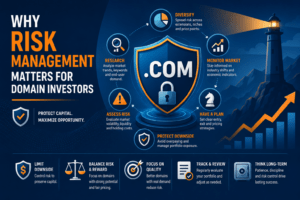 Why Risk Management Matters for Domain Investors
In the world of domain investing, opportunities are vast, competition is fierce, and the line between long-term profitability and financial strain is often determined by the presence or absence of a
 Domain Auctions: The Move from Private Deals to Public Bidding Wars
In the early domain name market, transactions were quiet affairs. Deals happened behind closed doors, initiated through direct outreach, personal networks, or a simple inquiry email sent to a domain
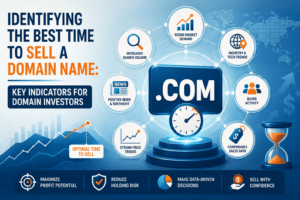 Identifying the Best Time to Sell a Domain Name: Key Indicators for Domain Investors
Knowing the best time to sell a domain name is one of the most critical decisions a domain investor can make. Timing is everything in domain investing, as market conditions, buyer demand, and trends
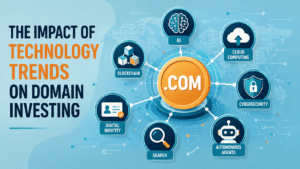 The Impact of Technology Trends on Domain Investing
The landscape of full-time domain investing is profoundly influenced by technology trends, shaping both the strategies employed by investors and the value of the domains themselves. As technology